 UnifiedAcupunctureTheory
Level 1 · In person
Applied I Ching
Twelve patterns for working with the whole body.
Formerly Meridian Interactions using the I Ching, then Applied I Ching Acupuncture – Level I.
Dance of the Channels treats a problem where it shows itself. When the problem is internal, functional or emotional, this course works differently. It uses channel conversion therapy, built on the logic of the I Ching, to move yin and yang through the whole body. You learn twelve patterns, each a complete treatment, for symptoms along the length of the body, for mental health and insomnia, and for external pathogenic factors. It is an excellent course for learning to build a vessel: a structure that holds your patients while they move through what they are going through.
- Format
- In person, with live demonstrations and practice
- Length
- 2 days
- For
- Acupuncturists and advanced students of acupuncture. Also shiatsu practitioners and kinesiologists with a basic knowledge of the channels and where they run.
- Certificate
- Attendance certificate for CPD (2 days, 14 hours)
- Level 2
- Leads on to Advanced Applied I Ching
The method
Three elements of every treatment
Channel conversion therapy builds each treatment from three layers. Together they make one of the twelve patterns.
- Dynamic interactions Alternating between yin and yang on the limbs creates a movement of yin and yang through the whole body.
- Static interactions The channels are chosen to form a stable structure, a figure of eight, a square or all connections, drawn from the channel interactions of Unified Acupuncture Theory.
- The channel code Each channel is given a gua from the Early Heaven Ba Gua, and the code guides the choice of points along the channel.
Applied I Ching or Applied Nanjing?
The vessel and the transformation
Both courses are used for internal disorders, so the question often comes up: what is the difference? They answer two sides of the same process.
Applied I Ching
The vessel
The structure, or container, in which change can happen. The twelve patterns build a vessel that holds the patient while they move through what they are going through.
This course
Applied Nanjing
The transformation
The process of change itself. The four needles work directly with what is weak or too strong, and help it transform.
The same idea runs through Tracing Your Deep Song, where we speak of the vessel and the prima materia.
What you will learn
“The firm and the yielding push against each other, and change is born.”
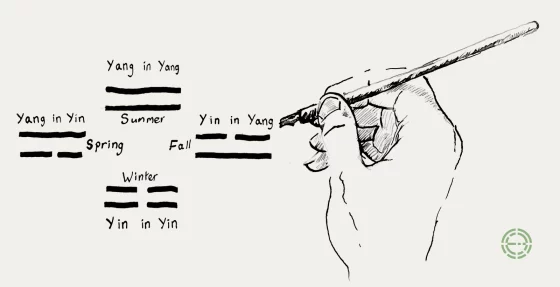
- Yin and yang in the I ChingHow yin and yang divide and combine, through the seasons and into the five elements, and from five elements to six, with Heaven.
- Dynamic and static interactionsHow to move yin and yang through the body, and how to hold that movement in a stable structure of channels.
- The channel codeThe Early Heaven Ba Gua, and how it guides the choice of points on each channel.
- The twelve patternsSix based on the levels of the channels, three on the horizontal levels of the UAT model, and three on the vertical positions of the channels, with the entry and exit points of the thorax and face.
- Patterns for the clinicWhich pattern to use for symptoms along vertical areas of the body, for mental health and insomnia, and for external pathogenic factors.
Dates for this course
All courses in the calendar-
31 Oct – 1 Nov 2026
Soesterberg, Netherlands Conferentiehotel Kontakt der Kontinenten · Organised by International Lectures Organised as ‘In line with the I Ching’ Map: Google · OpenStreetMapIn English EUR 445Register
No date near you yet? Tell me where you are, or bring a course to your country.
This course counts towards the UAT Practitioner certificate. See the certification pathway.
What practitioners say
“It's a wonderful course, attended it for the second time.”
“I missed the introduction course. That was a pity, but the course itself, the information etc. was very, very interesting.”
Questions
Do I need to know the I Ching?
No. You need a basic knowledge of the channels and where they run. The I Ching, the Ba Gua and the channel code are taught from the beginning. The course is open to acupuncturists, advanced students of acupuncture, and shiatsu practitioners and kinesiologists with that grounding.
Do I have to take the courses in a set order?
No. The three Level 1 courses can be taken in any order. I recommend starting with Dance of the Channels, because the static interactions in this course use its channel interaction systems. If you start here, the interactions you need are taught within the course.
Will I get a certificate?
Yes, an attendance certificate for your CPD, for 2 days (14 hours) of teaching.
Is there a next step?
Yes. Advanced Applied I Ching goes deeper into the theory and into complex cases. It is always in person, and open once you have taken this course.