 UnifiedAcupunctureTheory
Compassionate Inquiry® and acupuncture · Online and in person
Tracing Your Deep Song
Trauma-informed acupuncture, with Jonathan Shubs and Mary Lennon.
A cohort-based training that brings together the psychological depth of Compassionate Inquiry® and the somatic wisdom of Unified Acupuncture Theory. It is for practitioners who sense that technique alone is not enough, and who want to meet the deeper story their patients carry, safely.
- Format
- Online, then in person, then online
- Length
- 9 weeks online, 5 days in person, 2 follow-up sessions
- Place
- To be announced
- Teachers
- Jonathan Shubs and Mary Lennon
“The body remembers what the mind has set aside. Our work is to create enough safety that it can finally be heard.”
Three phases, one cohort
You travel through the course with the same group, from the first online module to the last follow-up.
Phase one · 9 weeks online
Building the foundation
A deep immersion in Dr Gabor Maté’s Compassionate Inquiry®: 8 weekly modules with 34 video teachings, a 2-hour Zoom integration session each week, and weekly practice in pairs and threes.
Phase two · 5 days in person
The integration
Five days together in person. Unified Acupuncture Theory treatments for emotional processing, and supervised hands-on practice bringing the inquiry and the needles into one way of working.
Phase three · 2 online sessions
Integration and closing
Two Zoom gatherings, one and two months after the in-person days, to share what has happened in your clinic and to consolidate it.
How change happens
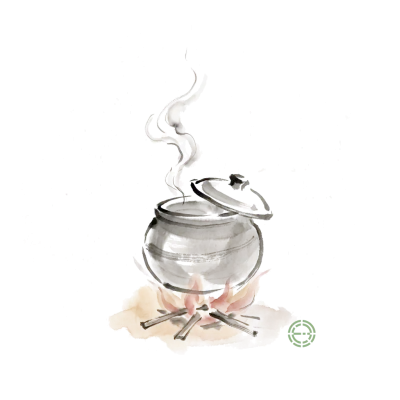
The vessel, the prima materia and the fire
In the language of alchemy, three things must be present for any change to happen. The course is built around them.
The vessel
Safety and containment
The container that holds the work: strong enough not to crack under heat and pressure, clear enough to see what is happening, and able to expand and contract.
The prima materia
The emotions
The substance we work with. Emotions are forms of qi, each with its own function, seeking expression. Once the vessel is strong, they can be transformed.
The fire
Movement and release
The catalyst: the energy that lets what has been held move, complete and let go.
The same idea runs through the Level 1 courses: Applied I Ching builds the vessel, and Applied Nanjing works with the transformation.
Two ways of seeing trauma
“Trauma is not what happens to you; trauma is what happens inside you as a result of what happens to you.”
“Pensiveness causes the qi to knot.”
When we go over an event again and again without feeling it, the flow of qi stops and ties itself into a knot. The course puts these two views side by side, so that the inquiry and the treatment speak the same language.
What you will learn
A way of working where listening and needling support each other.
- A foundation in Compassionate Inquiry®How to create safety, attune to the person in front of you, and gently uncover the beliefs beneath their patterns.
- Where trauma lives in the bodyHow trauma shows up at the different levels of the channels, from the surface to the deepest reservoirs.
- Building the vesselTreatments that give the patient a safe container before deeper emotional work begins.
- Emotions and the five elementsSeeing each emotion by its function, and helping one that is stuck or missing to move again.
- I Ching patterns for trauma workPatterns that strengthen the vessel and support the transformation.
- TimingWhen to inquire, when to treat, and when to simply stay present.
Your teachers
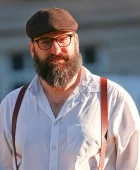
Jonathan Shubs
Acupuncturist and developer of Unified Acupuncture Theory, with 20 years of clinical experience.
About JonathanMary Lennon
Certified Compassionate Inquiry® Practitioner, Mentor and Short Course Educator, with a background in Chinese medicine and in aviation.
The next cohort
The dates for the next cohort are being planned. Join the early enrolment and you will be the first to hear when they are set.
Early enrolment is open
Places are limited. Join the early enrolment to hear first and be first in line when places open.
What's included
- 42 hours of teaching
- Attendance certificate
- Course notes
- Venue, meals and cancellation terms: see the organiser’s page
On video
More videos
Practitioners on this course
“Really resonated with Mary’s teaching style and her grounded presence.”
“The extras not only improve the course but also make the acupuncturists who followed it recognisable specialists.”
“Mary is a warm, caring, loving person. The world would be a better place with more Marys!”
Show more
“Both great teachers and very much complementary to each other.”
“I really think your system and stories are brilliant. Thank you for making this course so inspiring and fun.”
“How we could go so deep into matter in such a short time.”
“This course went far beyond my expectations. My heart is full, as connections were made.”
“I am very glad I followed this course. I feel gratitude for the sharing of knowledge and the compassion of the lecturers.”
“Jonathan is a very kind and good teacher, with humour.”
“Excellent knowledge and presence. I love how you make it simple.”
“I really liked the last day. It all fell into place how to combine the two skills.”
“I think I found a new love in CI + acupuncture.”
“Teaching through storytelling is a beautiful and very beneficial way to learn.”
“[Mary] has a very clear and watchful eye for what is happening in the group and in the individual.”
Questions
Do I need to know Compassionate Inquiry® already?
No. Phase one gives you the foundation, before the in-person days.
Do I need to have taken a UAT course?
No. Everything you need is taught in the course. If you would like to go further afterwards, the Level 1 courses are a good next step.
Is this trauma therapy?
It trains you to work in a trauma-informed way within your own practice. It does not make you a psychotherapist.
Certificate and CPD
You receive an attendance certificate for 42 hours. Organisers register the course for CPD points with the professional bodies in their country, where such a system exists — for example NVA and Zhong in the Netherlands; EMR, ASCA and TCM Fachverband Schweiz in Switzerland; and in Australia the organiser arranges accreditation for each course. If you’re unsure, ask the organiser.
I have another question.
Write to us at contact@uat.training.